What Exactly Is Culture?
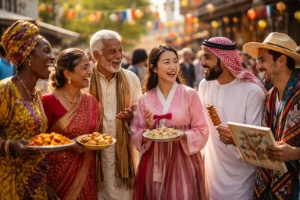
The term culture is often thrown around as people try to explain why and how other people differ from them. Some people even think it is genetic, which it is not. So, what is it? Culture refers to the ways of life that are taught to us from the time we are born and reiterated to us through our societal experiences as we grow older.
Outwardly, our culture shows up in things such as our dressing, language, food, music, home designs, and so on. And inwardly, our cultures shape our beliefs and values, and as such, they play a role in our etiquette and assumptions. Put together, culture creates a guide that we follow in order to fit into society.
Why the Differences?
Given all the commonalities we have as human beings, why is it that our cultures are so different? It all comes down to two main factors. The first is our environment. Human beings have always adapted to their environments for survival. So, the norms that have applied to people in one climate may be starkly different from those of the people in another. For instance, people who grew up by the sea learned to fish and carved out diets that were rich in marine life, yet people who grew up in the mountains have a different story. So, when you review such communities based on their economic activities, housing designs, clothing, and more, you can tell that their adaptations were different in accordance with their circumstances.
Take the Maasai, for example. This East African community, which lives in the savannah, is well known for its nomadic lifestyle and its appreciation for cattle, which it views as a sacred gift. But when you move on to the Inuit culture in North America, you find that they excel in hunting whales, seals, and caribou, seeing as they live in the Arctic.
The second main factor is isolation. For most of human history, communities lived far apart due to barriers such as oceans, mountains, and deserts. So, each community got to come up with its own creative ways to organize itself. From language to leadership, every community determined what worked for it. And since these systems were developed in isolation, they tend to be quite different from each other.
It is important to note that due to migration, trade, and other activities over the past few centuries, cultures are no longer as distinct as they once were, as people have borrowed norms from each other. Even so, cultural roots remain intact, which explains why our ways of life remain so different despite how connected we are as a global society.
How Does Culture Impact Us?
Many are the times that we make decisions without realizing that these stem from our cultures. How so? At the individual level, your culture determines things such as what careers you think are respectable, how you process your emotions, how you dress, and so on.
And when it comes to the societal level, culture spells out the expectations that society has for each individual, such that if you want to leave peaceably with other people, you must toe the line.
Here are some examples of ways in which culture shows up in our daily lives that you may not have considered in the past:
- Mealtimes: Your culture dictates what ingredients you think are necessary in food and how you eat the food. For example, if you come from a community where mealtimes are communal, you will prefer eating with other people as opposed to grabbing a bite on the go.
- Communication. Have you ever noticed how people have different expectations when it comes to aspects such as tone, body language, eye contact, and other communication aspects? For example, some cultures have very blunt approaches while others go for polite hints.
- Time. While some cultures push people towards taking more rest, others push them towards more productivity, and others sit in the middle. And this shows up in how people treat their time, both at home and at work.
Cultures also determine things such as how much personal space you deem important, what rites of passage matter to you, and so on. And if you think about it, you are likely to pick out some of your habits that you can boil down to your culture.
Even so, you still have agency over your life such that you do not have to follow cultural norms if they do not align with your values.
Is Cultural Diversity Important?
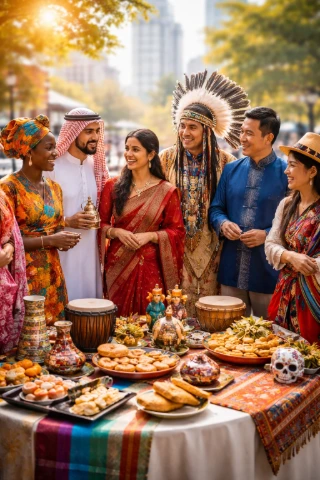
You may have noticed that in the modern day, some people have lost touch with their cultures, and many cultures are increasingly bleeding into each other. But does this matter? Would it be a good thing if we were all the same? Well, the truth is that though cultures may separate us in some ways, this distinction is actually a good thing.
To start with, we need unique viewpoints when tackling modern-day problems. From climate change to disease, the world currently faces complex problems that threaten our futures. And while one might think that approaching these problems with one mind might be the answer, the truth is that diversity wins in this regard. Different communities have already come up with unique ways to deal with issues, and if we can put these solutions together, we can come up with approaches that work for various regions in various circumstances. For example, while the process is complex, many traditional medicine practitioners partner with research labs to let them in on affordable and safe cures for many ailments that we face as a society.
Besides innovation, encouraging cultural diversity is important for a peaceful society. For a long time, people have generally judged each other for being different. And while most of this judgment has been harmless, some of it has caused harm. Examples include xenophobia, racism, and other social ills that take place when people fail to understand the people who act differently from them. By welcoming various cultures and taking the time to understand why people act the way they do, we can create a society where people lead with empathy, and this can foster peace around the world.
And that is why we, at Living Cultures, which is an independent publication, explore cultures around the world by reviewing personal stories, films, photography, and other forms of verifiable documentation. In this way, we are able to get a closer look at different communities and understand how cultures have shaped our lived experiences and how they continue to do so.
The Evolution of Culture
Over the years, our cultures have changed a lot owing to reasons such as technology, migration, urbanization, and social activism. These and other factors have created avenues through which we can understand each other as we move past outdated traditions and harmful stereotypes. There is, however, a need to balance this much-needed progress to ensure that we hold onto the positive aspects of our cultures.